Smart Budgeting Strategies for First-Time Investors
May 3, 2031
Saving Tips
October 30, 2029

Sarah Lee
8
Minutes read

Making informed financial decisions is more important than ever in today’s fast-paced and unpredictable economy. Whether you're managing a household budget, running a small business, or planning for retirement, financial forecasting has become a key tool for achieving long-term success.
But what exactly is financial forecasting—and why should you care?
Financial forecasting is the process of using historical data, current trends, and predictive models to estimate future financial outcomes. In simpler terms, it helps you see ahead, allowing for better planning, risk management, and smarter money decisions.
Gone are the days when budgeting once a year was enough. In 2029, dynamic financial forecasting allows individuals and organizations to stay agile and proactive. Here are a few compelling reasons to make it part of your routine:
Understanding the different forecasting types helps you pick the right one for your goals:
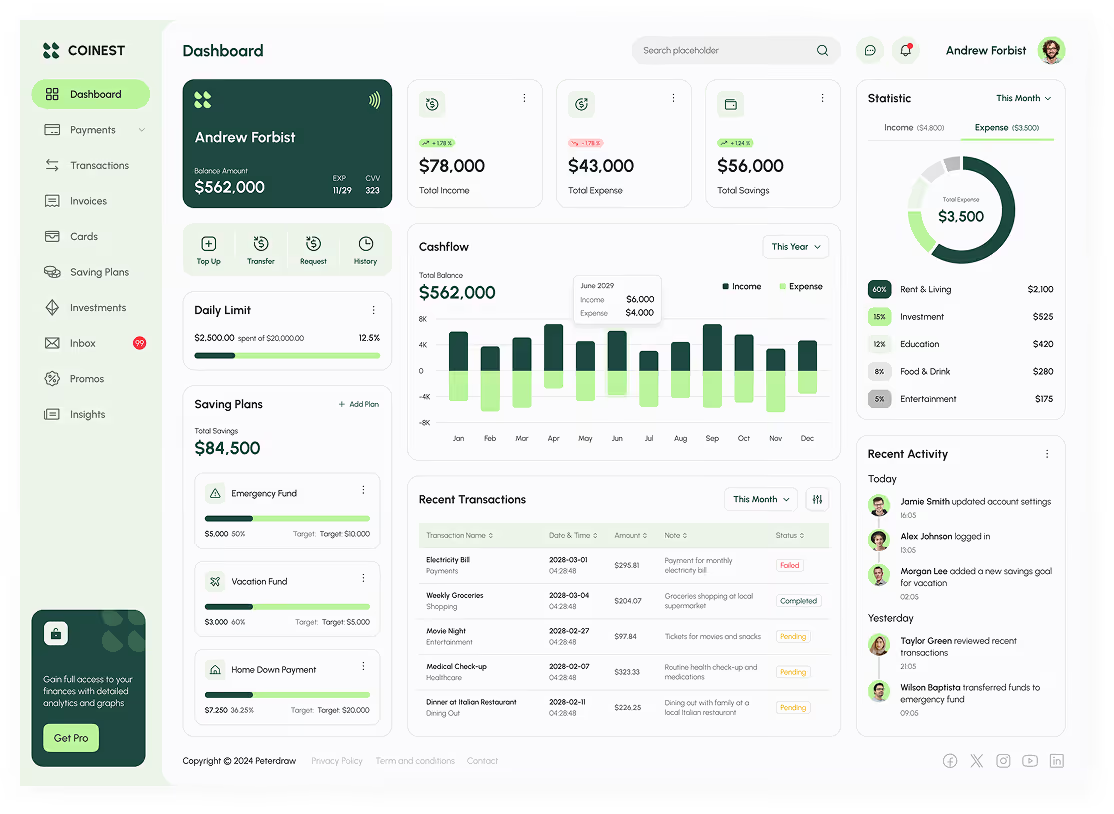
Thanks to modern financial platforms like Coinest, anyone can start forecasting without being a math expert. Features such as:
make forecasting both accessible and effective.
Other popular tools in 2029 include YNAB (You Need A Budget), Tiller, and QuickBooks for business forecasting.
Financial forecasting empowers you to take control of your future rather than reacting to it. It builds confidence, encourages intentional planning, and helps avoid financial surprises. Whether you’re a solo freelancer or part of a growing team, it’s a tool that turns uncertainty into opportunity.
Join thousands of users managing smarter with Coinest.
.webp)
.webp)
.webp)