
Smart Budgeting Strategies for First-Time Investors
May 3, 2031
Investing
December 24, 2026

Alex Reed
10
Minutes read

Over the last two decades, a subtle yet powerful shift has transformed the investment world. While flashy stock picks and active management strategies once dominated headlines, investors today are increasingly turning to a quieter, more consistent option: index funds.
Index funds are a type of mutual fund or exchange-traded fund (ETF) designed to replicate the performance of a specific market index—like the S&P 500, Nasdaq, or Dow Jones Industrial Average. Instead of trying to beat the market, they aim to be the market, delivering returns that mirror its performance.
The rise in popularity is more than just a trend. It’s a reflection of growing investor awareness, backed by data, that long-term wealth is often built not by picking winners but by consistently riding the market’s growth.
One of the biggest reasons index funds have gained traction is their simplicity. Investors don’t need to monitor the market daily, analyze earnings reports, or stress over volatility. With index funds, you’re buying a little bit of everything in that index—which spreads risk and smooths out performance.
Here are five key advantages:
Studies from financial research firms like Morningstar and S&P Dow Jones show that over 80% of actively managed funds underperform their benchmark index over 10 years. Even highly paid fund managers often can’t beat a basic index fund.
This is part of the reason why major investment firms like Vanguard, BlackRock (iShares), and Fidelity have heavily pushed index funds in recent years—making them a central offering in 401(k) plans and retirement portfolios across the world.
Legendary investor Warren Buffett famously endorsed index funds for the average investor. In his 2013 letter to shareholders, he stated that he plans to leave instructions for his estate to invest 90% of his wife’s inheritance into a low-cost S&P 500 index fund. That’s a ringing endorsement from one of history’s most successful stock pickers.
Passive investing with index funds isn’t about quick wins or overnight wealth—it’s about steady growth, patience, and compounding. For those who value long-term success over short-term speculation, index funds are one of the most efficient, stress-free vehicles available.
Of course, that doesn’t mean they’re perfect. During market downturns, index funds will fall with the broader market. But for investors with a long-term horizon and a disciplined mindset, these dips are opportunities—not disasters.
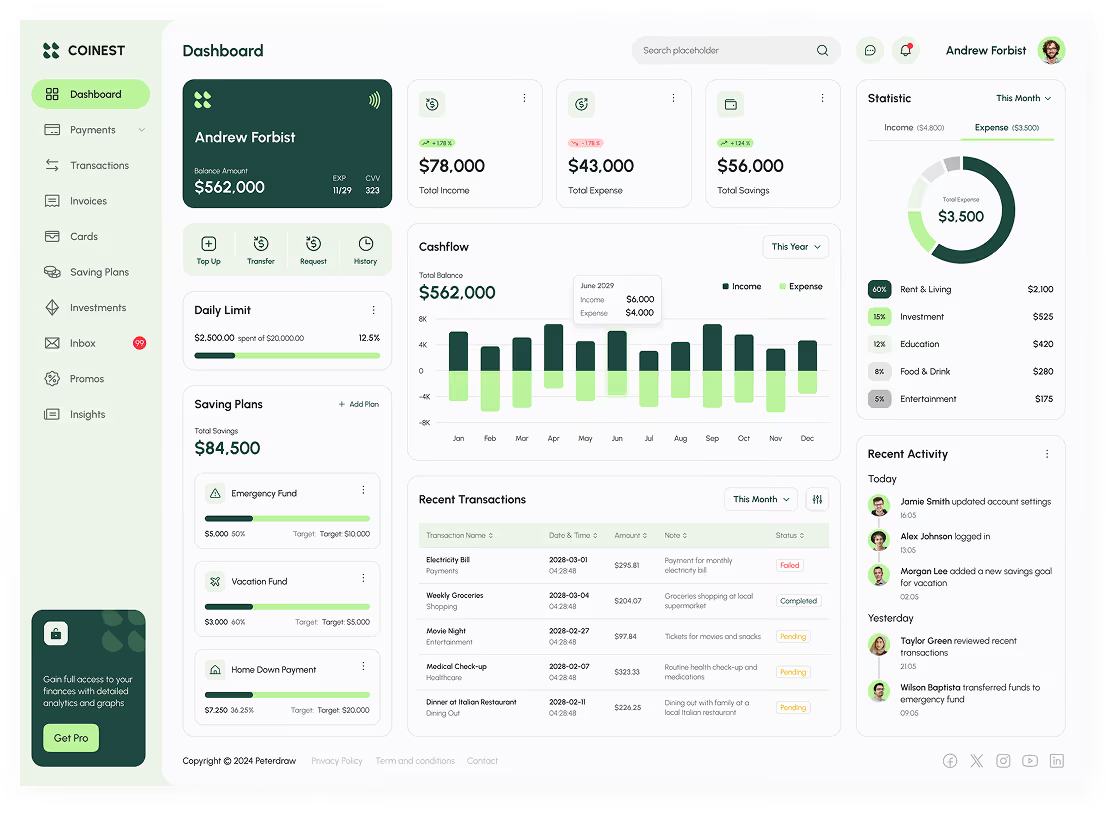
If you’re just starting your investment journey, index funds offer an excellent entry point. Many brokerages and apps offer access with no account minimums and low fees. On Coinest, you can easily track index fund investments, view historical returns, and set long-term goals using our integrated tools.
Whether you’re building an emergency fund, saving for retirement, or simply growing your wealth, index funds deserve a spot in your portfolio.
Join thousands of users managing smarter with Coinest.
.webp)
.webp)
.webp)